

Population data visualization
Scroll down the page to see the data automatically sort itself according to mutation status, and to view additional static visualizations of the surgical and clinical risk status data for each of the trials listed.
Click any four buttons to filter the data visualization below:
- Women with advanced ovarian cancer
- SOLO-1 population
- PAOLA-1 population
- PRIMA population
Women with advanced ovarian cancer1-4
SOLO-1 patient population5
SOLO-1 patient population5
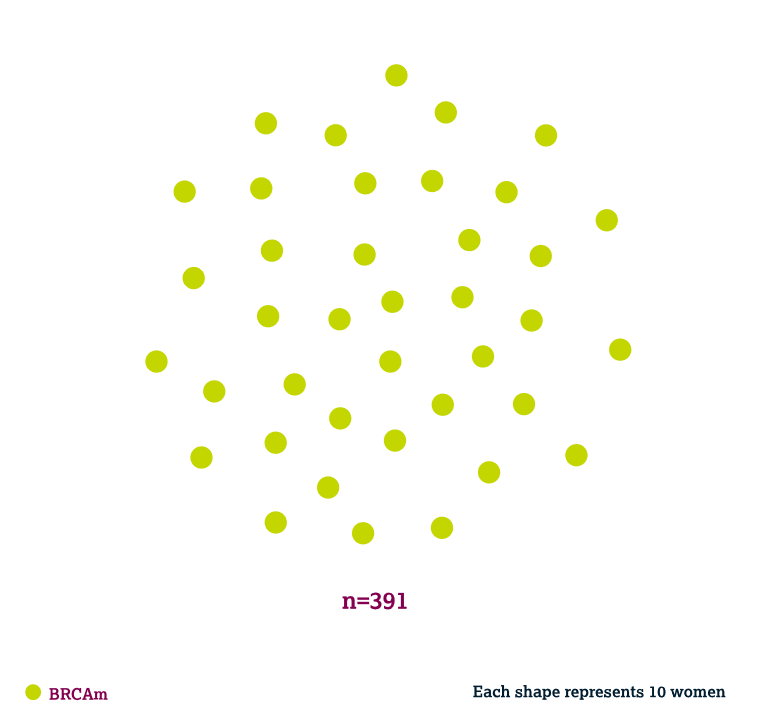
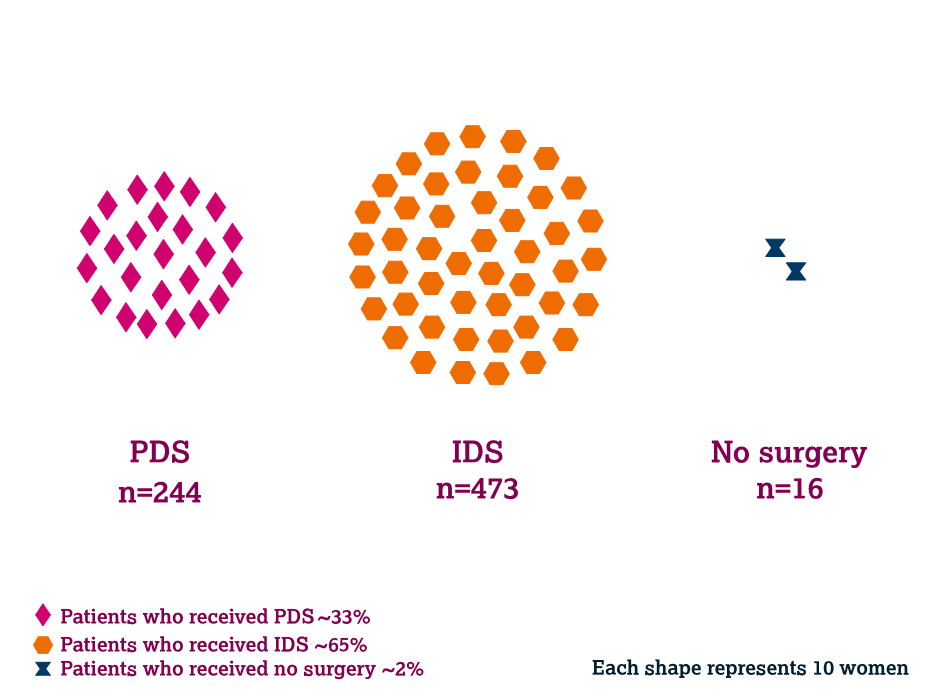
SOLO-1 patient population - ITT (BRCAm) by surgical status5
SOLO-1 patient population - ITT (BRCAm) by surgical status5
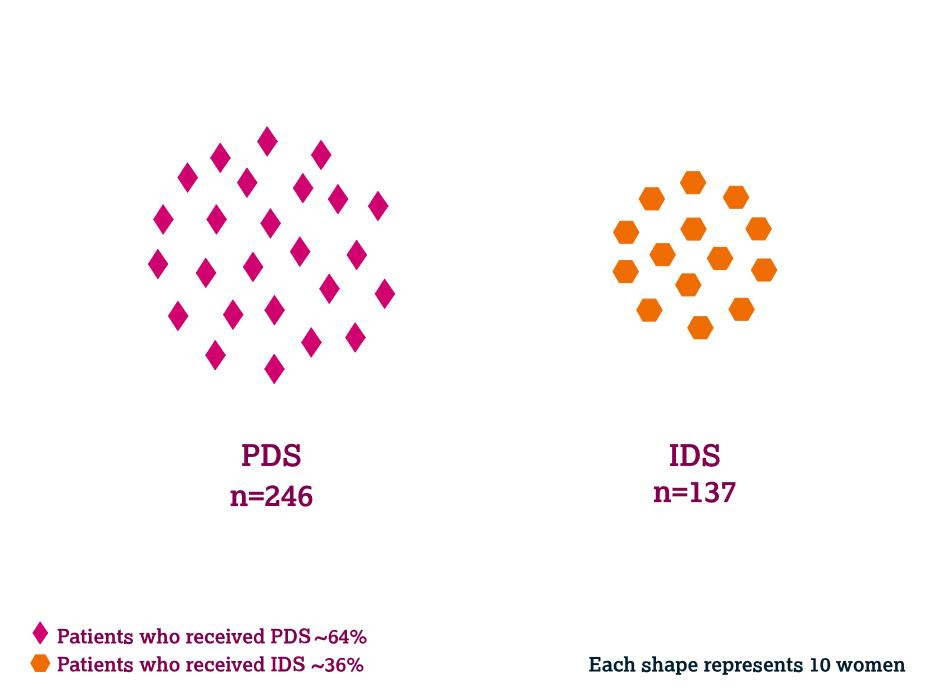
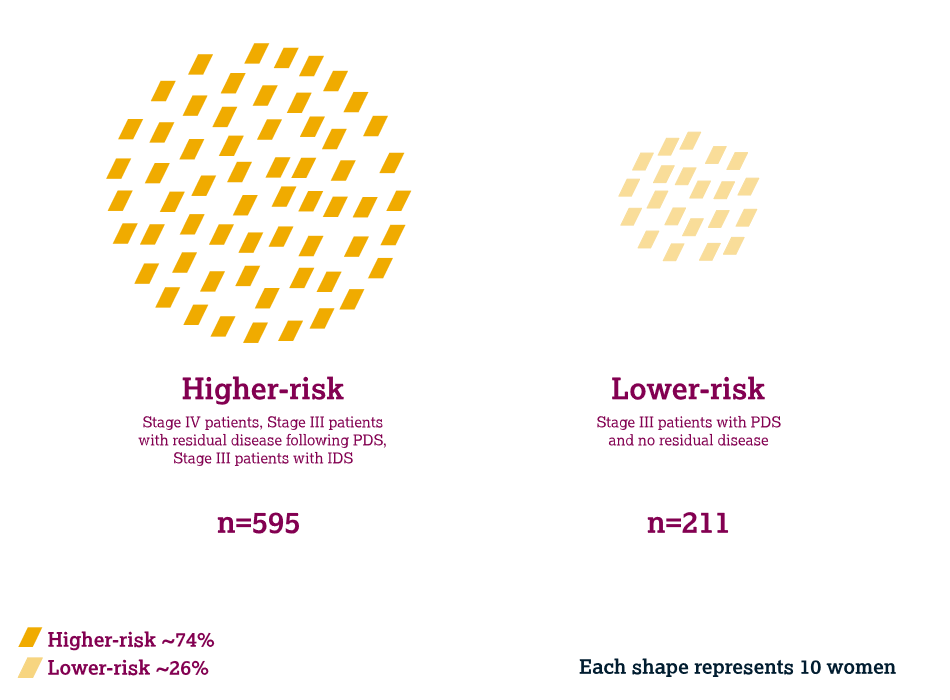
SOLO-1 patient population - ITT (BRCAm) by clinical risk status6
SOLO-1 patient population - ITT (BRCAm) by clinical risk status6
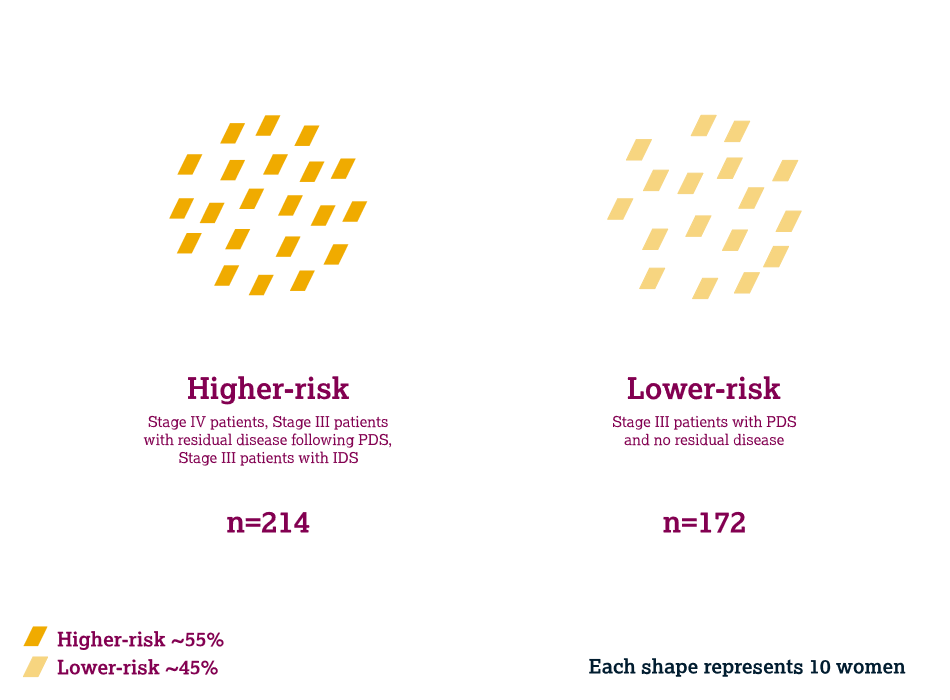
Note: PFS analysis by risk excludes five patients recruited in China
PAOLA-1 patient population8,9
PAOLA-1 patient population - ITT by surgical status10
PAOLA-1 patient population - ITT by surgical status10
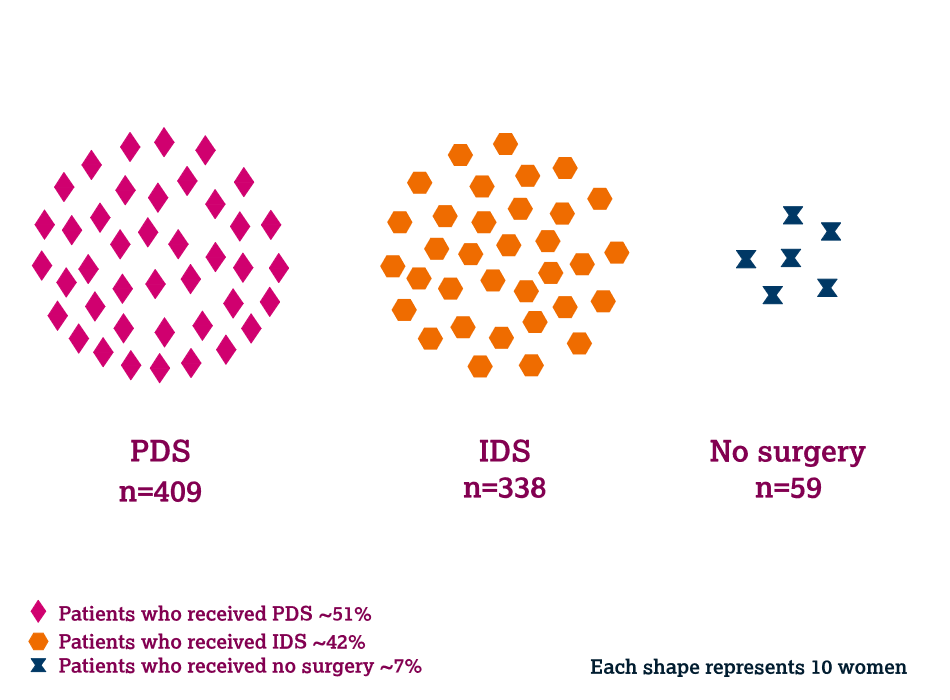
PAOLA-1 patient population - ITT by clinical risk status10
PAOLA-1 patient population - ITT by clinical risk status10
PRIMA patient population11
PRIMA patient population - ITT by surgical status11
PRIMA patient population - ITT by surgical status11
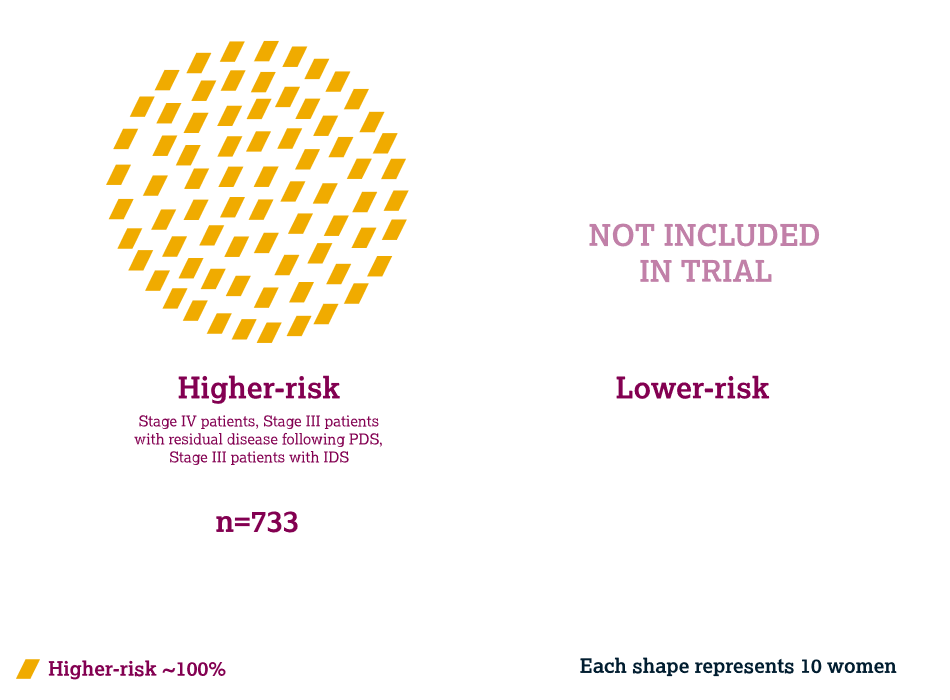
PRIMA patient population - ITT by clinical risk status12
PRIMA patient population - ITT by clinical risk status12
Abbreviations
BGI = Beijing Genomics Institute
;BRCAm = BRCA mutation
;CA-125 = cancer antigen 125
;CR = complete response
;eCRF = electronic case report form
;FIGO = International Federation of Gynecology and Obstetrics
;HRD = homologous recombination deficiency
;HRRm = homologous recombination repair gene mutation
;IDS = interval debulking surgery
;N/A = not applicable
;NACT = neoadjuvant chemotherapy
;NED = no evidence of disease
;PDS = primary debulking surgery
;PFS = progression-free survival
;PR = partial response
;tBRCA = tumor BRCA
;tBRCAm = tumor BRCA mutation
References
2. du Bois A, Reuss A, Pujade-Lauraine E, et al. Pfisterer J. Role of surgical outcome as prognostic factor in advanced epithelial ovarian cancer: a combined exploratory analysis of 3 prospectively randomized phase 3 multicenter trials: by the Arbeitsgemeinschaft Gynaekologische Onkologie Studiengruppe Ovarialkarzinom (AGO-OVAR) and the Groupe d'Investigateurs Nationaux Pour les Etudes des Cancers de l'Ovaire (GINECO). Cancer. 2009;115(6):1234-1244. doi:10.1002/cncr.24149
3. da Cunha Colombo Bonadio RR, Fogace RN, Miranda VC, et al. Homologous recombination deficiency in ovarian cancer: a review of its epidemiology and management. Clinics (Sao Paulo). 2018;73(suppl 1):e450s. doi:10.6061/clinics/2018/e450s
4. Konstantinopoulos PA, Ceccaldi R, Shapiro GI, et al. Homologous recombination deficiency: exploiting the fundamental vulnerability of ovarian cancer. Cancer Discov. 2015;5(11):1137-1154. doi:10.1158/2159-8290.CD-15-0714
5. Moore K, Colombo N, Scambia G, et al. Maintenance olaparib in patients with newly diagnosed advanced ovarian cancer [article and supplementary appendix]. N Engl J Med. 2018;379(26):2495-2505.
6. Banerjee S, Moore KN, Colombo N, et al. Maintenance olaparib for patients with newly diagnosed advanced ovarian cancer and a BRCA mutation (SOLO1/GOG 3004): 5-year follow-up of a randomised, double-blind, placebo-controlled, phase 3 trial. Lancet Oncol. 2021;22(12):1721-1731.
7. DiSilvestro P, Colombo N, Scambia G, et al. Efficacy of maintenance olaparib for patients with newly diagnosed advanced ovarian cancer with a BRCA mutation: subgroup analysis findings from the SOLO1 trial. J Clin Oncol. 2020;38(30):3528-3537. doi:10.1200/JCO.20.00799
8. Ray-Coquard I, Pautier P, Pignata S, et al. Olaparib plus bevacizumab as first-line maintenance in ovarian cancer [article and supplementary appendix]. N Engl J Med. 2019;381:2416-2428.
9. Ray-Coquard I, Pautier P, Pignata S, et al. Phase III PAOLA-1/ENGOT-ov25: maintenance olaparib with bevacizumab in patients with newly diagnosed, advanced ovarian cancer treated with platinum-based chemotherapy and bevacizumab as standard of care [presentation]. Presented at: European Society for Medical Oncology (ESMO) Congress; September 27-October 1, 2019; Barcelona, Spain.
10. Harter P, Mouret-Reynier MA, Pignata S, et al. Efficacy of maintenance olaparib plus bevacizumab according to clinical risk in patients with newly diagnosed, advanced ovarian cancer in the phase III PAOLA-1/ENGOT-ov25 trial. Gynecol Oncol. 2022;164(2):254-264. doi:10.1016/j.ygyno.2021.12.016
11. González-Martín A, Pothuri B, Vergote I, et al. Niraparib in patients with newly diagnosed advanced ovarian cancer. N Engl J Med. 2019;381(25):2391-2402.
12. Gonzalez-Martin A, et al. Niraparib therapy in patients with newly diagnosed advanced ovarian cancer after chemotherapy: PRIMA/ENGOT-OV26/GOG-3012 Study. Presented at: European Society of Gynaecological Oncology (ESGO); November 2-5, 2019; Athens, Greece.
Document ID: b4d9fab7-522d-45fc-9e0f-56ef73004679
Last updated: 27-February-2023



©2023 AstraZeneca. All rights reserved.